Most of us don't think about our bones until something goes wrong — a fall, a fracture, a diagnosis that comes as a surprise. But bone health is one of those things that quietly changes over the years, often without a single symptom to warn you. That's exactly why bone density testing deserves a place in your regular health routine as you get older.
What Is a Bone Density Test?
A bone density test, often called a DEXA scan (dual-energy X-ray absorptiometry), measures how much calcium and other minerals are packed into a segment of your bone. It's quick, painless, and involves far less radiation than a standard X-ray. The result gives your doctor a clear picture of your bone strength and your risk of fracture.
Why It Matters As You Age
Bone is living tissue. Throughout your life, your body breaks down old bone and builds new bone in a continuous cycle. In your younger years, bone-building outpaces bone loss. But starting around your mid-30s, that balance begins to shift. Bone loss gradually starts to outpace bone formation — and for many people, especially women after menopause, that loss can accelerate significantly.
The tricky part is that bone loss is silent. There's no pain, no warning sign — until a bone breaks. This is why osteoporosis is sometimes called a “silent disease.” Many people don't discover they have weakened bones until they experience a fracture from a minor fall or even a routine movement like bending or coughing.
Who Should Get Tested?
General guidelines suggest bone density testing for:
- Women age 65 and older, and men age 70 and older
- Postmenopausal women under 65 with risk factors such as family history, low body weight, or smoking
- Men age 50–69 with risk factors
- Anyone who has broken a bone after age 50 from a minor injury
- People with conditions or on medications known to affect bone density (such as long-term steroid use, rheumatoid arthritis, or certain thyroid conditions)
If you're unsure whether testing applies to you, it's worth a quick conversation with your doctor.
The Benefits of Catching It Early
Early detection changes the story. If a scan reveals low bone density, you and your doctor have real options: lifestyle adjustments, dietary changes, weight-bearing exercise, and, when needed, medication to slow bone loss or rebuild strength. Catching the issue before a fracture happens means you can take action while you still have the most flexibility — rather than reacting after an injury that could affect your independence and quality of life.
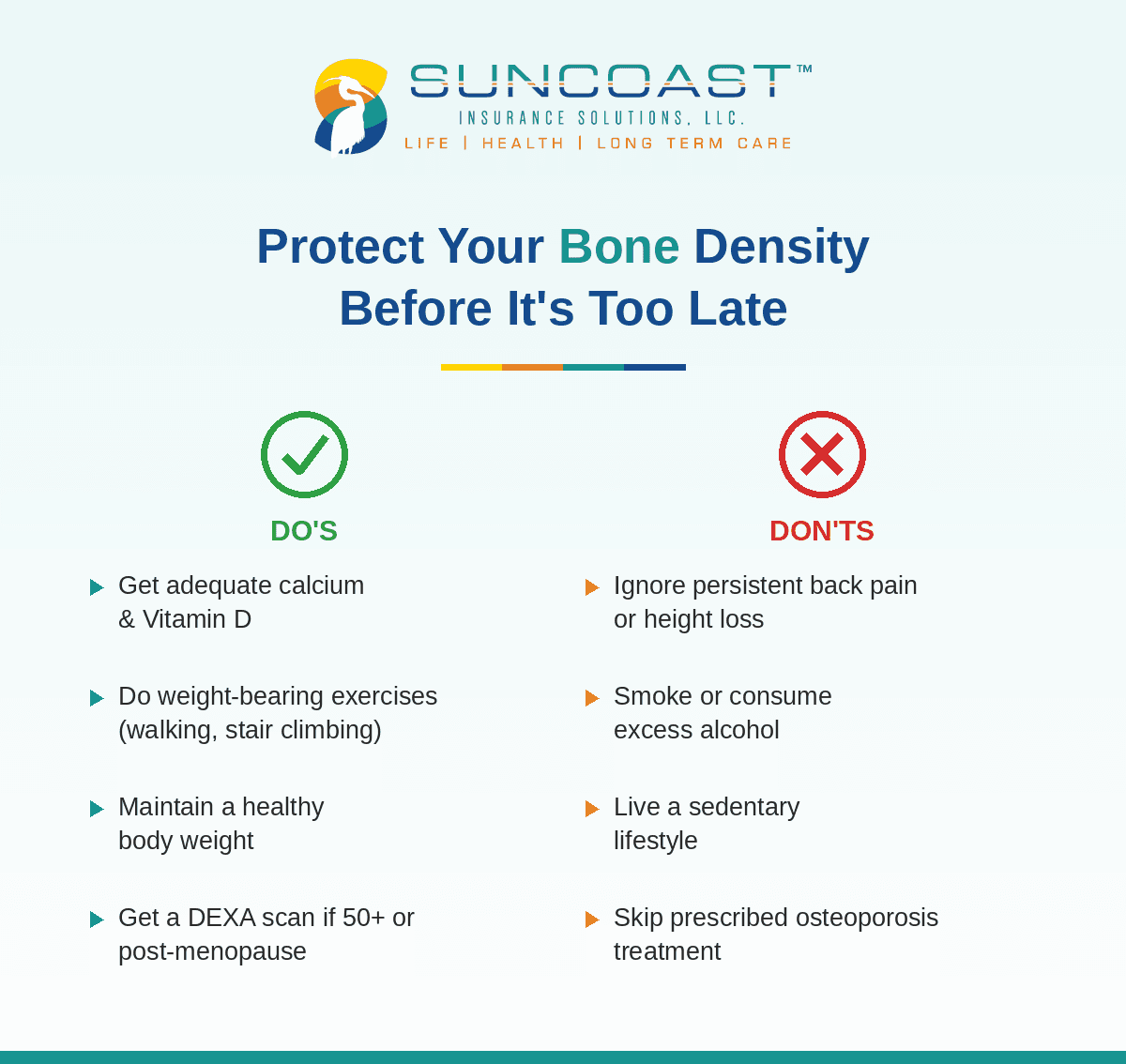
Simple Steps to Support Bone Health
Whether or not you've been tested, these habits support strong bones at any age:
- Get enough calcium and vitamin D through diet or supplements
- Incorporate weight-bearing and resistance exercise, like walking, hiking, or strength training
- Limit alcohol and avoid smoking, both of which accelerate bone loss
- Talk to your doctor about your personal risk factors, including family history and medications
The Bottom Line
Bone density testing isn't about fear — it's about awareness. A simple, painless scan can reveal information that helps you protect your mobility, independence, and quality of life for years to come. If you're approaching the age where testing is recommended, or you have risk factors that put you at higher risk, don't wait for a fracture to start the conversation. Ask your doctor about a bone density test at your next visit.